Samstag, 2. Mai 2015

"Ancud" by mosque

mosque - the musical collaboration of Oskar May and me have uploaded a new track to our soundcloud profile. Please take check it out, comment and enjoy. It is a bit more upbeat then the other one and might give you an impression of the stylistic variety we are trying to grasp.
Also: I can now announce that we'll play our first concert ever on 4th of June 2015 @ Celeste, Vienna thanks to wonderful Feathered Coyote - more info soon!

Donnerstag, 16. April 2015

abseits, mittelprächtig.


My dear friend Max Bogner aka. Margaret Unkown has taken upon himself the work of recollecting all the old recordings of our very early band "abseits, mittelprächtig." which for both of us has been a very vital part of our becoming ourselves. I have written a little text about it and you can find and listen to everything on his beautiful homepage: http://www.margaretunknown.com/new-page/


"abseits, mittelprächtig. has been a very early "lab" for experiments in performative, musical, digital and dadaist expression which has taught me a lot and which's results became a sort of base for my further artistic approach. Margaret and me were in our teens when we discovered the surrealist manifesto by André Breton and experimental (noise) composition such as Henri Chopin, Luigi Russolo and Kurt Schwitters. To us this presented a whole new universe and a liberating means of rebellion against the rigid "bourgeoise" structures of the society we grew up in. Enthusiastic about the idea of finding a surrealist music far off the shores of traditional, rational harmonics, we have experimented with many instruments, objects and recording devices. Identifying classical harmonics or structure as the Rationalism the Surrealists were fighting almost a century ago, we looked for a sound that is more true and more direct to what we tried to discover as being us ­ maybe a bit like Schopenhauer's Wille, without the distorting and alienating qualities of the "filter" Vorstellung, if a philosophical analogy is permitted. We never gave a concert in the traditional way and I doubt that the music we produced will find many listeners in the future. All of this doesn't matter, because for us this band project was a crucial vehicle in finding our artistic expression aside from anything you can learn at academia ­ it was connected to finding ourselves in our last teen­years and thereby one essential nexus of this artworks were our personas. We have experimented with sound art, implementing voices from the internet, neighbors and old tapes into our pieces to swallow (i.e. "reflect on") the context our music was created in. We have experimented with self­presentation in the time of the internet, creating us a fake biography (mostly copied from the Beatles­wikipedia) and inviting weird outsider artist (Neonazis and the like) we found in the unutterable widths of the internet to collaborate with the "great abseits, mittelprächtig." In doing so, we were playing very early and naively with what it means to build a name and what is authenticity when so much can be done via digital alter egos like facebook, last.fm or myspace. In a similar vein we have done a fake Indie music performance at Marco Enedi's Free Impro Open Stage in Celeste Vienna or played impro­sessions on the streets of Vienna, begging for money. In roaming through the widths of the world, we also came to discover the atrocities of our world and felt the need to display them. This is how the record "Teen crying after pervert neighbor fucked her" found its name, which is the title of a porno movie, we found in a session, where I decided to only make music with sounds I find on the internet. Shocked by a title like that (who the hell would like to see that?), we decided to take this title, to reveal how dirty the world sometimes is. abseits, mittelprächtig. has never reached any recognition whatsoever, nor did it intend to do so. But if we talk about it with the few couple of friends who new it, it still feels like a legendary as well as defining underground band we've had, because so much of what we discovered there has become defining for our future world."

Mittwoch, 1. April 2015

mosque - gleinenen

For now almost a year I am - in collaboration with Oskar May - working on a new musical project, which - for me personally - is actually the most promising musical endeavour I have ever undertaken so far. Oskar is mainly responsible for beats, base- and synthlines, while I am mixing, looping and alienating field recordings I collected all over the world. Together this forms voyages, which go beyond the classical field recording, for they do have more or less conventional song structures, but also exceed the classical electronic track. It does have many - more or less intentional - allusions to philosophical, political and other themes and does nonetheless incorporate aleatoric strategies as well.
We call ourselves mosque and below you can find the first track ever which goes public. Please give us feedback and if you are interested in having us perform live somewhere, please let us know - we just decided that we now want to go in that direction.

Freitag, 27. März 2015

confession


life’s so little to live on
body wails
jealously contemplating the mind
rushing by thoughtlessly

galactic voyages
must be pursued
infinitely more attractive
gravitational trap

constructs himself highways
still don’t catch up, don’t match
soil turned star dust, soon
will be victim & mutual collapse

Freitag, 13. März 2015

Philosophy Unbound #2 - The Feminist Edition

I forgot to mention this earlier on my blog, but we have started a new collective called Philosophy Unbound last year. We are dedicated to provide a new space for philosophy outside its traditional (academic) realms and mediums - we believe philosophy can dance, sing, play, shout, kick, perform and many more things and found the "Club culture" environment to be quite a fertile soil for philosophy (if you liberate it from the rigid eliteness and up-tightness it is usually associated with).

Our first event happend on the 15th of January 2015 and was quite a major success. Now - on March the 25th we will have the second edition with a special focus on feminism. It will take place at Celeste and Spektakel theatreat Hamburgerstraße 14 and 18, 1050 Vienna. Start: 20h on time - be there earlier for we expect quite many to come.


For more information about the event, please see https://www.facebook.com/events/990878150924328/ and our blog http://philosophyunbound.tumblr.com/

For more information about philosophy unbound, please read our manifesto here:
http://philosophyunbound.tumblr.com/about

Hope to see you there!
PS: Philosophy Unbound #3 will most likely happen on 13th of May - save the date!


Samstag, 24. Januar 2015

About Charlie


The reasons for being Charlie are varying to a great deal and it is not at all my intent to condemn all of them. The terrorist attacks in Paris have been a huge and ghastly crime, for which there is no excuse and only condemnation and this is the motive for many people, to suddenly discover that they are Charlie. However, there is a tendency in the recent "Je suis Charlie" discourse which I find worrying and which I want to briefly address in this post.
The slogan "Je suis Charlie" is often waved as a kind of symbolic banner for freedom of speech. "We Westerners will never give up our freedom of speech, those damn muslims will never make us silent and stop us from doing caricatures of Mohammed or whoever. Now more than ever it is our duty to print as many caricatures of Mohammed to show that we are not giving in to fear and terror. We will defend our long fought for right for free speech and express-ability, our gem of occidental culture" seems to be the outline of this kind of thinking.
Following this train of thought, newspapers headline with "satire is allowed to do anything" and urge for a fight against muslim terror and for our values, which we are allegedly defending with posting more caricatures of Mohammed. This leads to conclusions like calling it a "victory of fear" when the New York Times decides to not print all of Charlie Hebdo's latest post-assault edition.
But why should this decision of one of the world's leading newspapers be one of fear? It could just as well be one of decency - decency and sensibility towards the feelings of others. Because what we seem to be forgetting in all this heated debate is that only because we are in theory allowed to say everything, we are not urged to do it. For example: we do not make fun of homosexuals. Neither do we make fun of handicapped people, of people with scars in the faces or with other disfigurement. We do not laugh out at a person who is especially small or tall, who has a weird voice or some other things which we might be in theory be able to make a joke about, neither have I ever seen a caricature of a person in a wheelchair that is unable to enter a bus or descend a staircase. Why is that?
Because there are things that hurt people and its a part of basic human decency and respect that we do not make fun of things that hurt other people. It is a fact that it hurts most muslim people if we make fun or produce a caricature of Mohammed, but in this matter we seem to have a blind spot in our decency. When it comes to caricatures of Mohammed we seem to see it as an integral part of the pillars of our Western Enlightenment, that we may print as many of them as possible and celebrate those who have produced some as some sort of semi-heros.
It seems to me that the West - and especially Europe - has some problem in accepting that a) secularism, freedom of speech and laicism is a cultural product of the West, and not a universal achievement of humanity and b) that other cultures have different ways of dealing with religion.
b) Western - especially European - culture has lost most of religiousness in the last 500 years. For about two centuries it is more and more normal to be an atheist / agnostic and to insult and fight the church, the Vatican and christianity in general with all means of provocation at hand. It is worth remembering that most other cultures have never developed such a strong notion of anti-religiousness and atheism as the former Christian one. For example: there is hardly no radical critique of Islam within the muslim world. The huge majority of Muslim reformers do not reject Islam entirely, but seek reform within Islam (like historical reading of the Qur’an and so on). What has always deeply fascinated me, when I was in a Muslim country like Morocco or Indonesia is to see, how one religion can actually work. Despite all the personal problems I might have with the religion, I still couldn't stop feeling awe about how religion can unite a people - how it is a common denominator for one society, holding it together in some completely alien way for a modern Westerner like me. Although I am not at all for any religious hegemony and am happy that Christianity's collapsed in Europe, it was very interesting to me to see, how religion can still me some kind of master narration.
a) Secularism has come into existence in a culture which has witnessed the death of god and is linked with Christian metaphysics of emancipation, which are not universal but something very occidental. So if we claim that secularism and freedom of speech should be applicable throughout the world, we act - in a very weird way - in the same manner as Christian imperialists have acted centuries ago: we think that our world view and its internal value are something universal for all humanity and that it is our duty to bring it to all of the world. In acting so we are still more Christian than we would like to think: we still have the same notion of universality which has led Columbus and his successors to enslave the most of the non-European world. We mistake our local perspectivism for a global universalism and demand it to be applied all over the world. We demand our right to do a caricature of whoever because it is a part of our right, which we have long fought for.
This wrong notion of universality makes us blind and insensitive towards general decency and respect for the feelings of others. Especially when it comes to a culture like the Muslim one, which we find a bit weird, for it has a religious system, which seems to be working - for no reason that our Western understanding can fathom. Just because it is normal for us to make fun of Christian religion and say whatever we want to about it, we must not apply the same standards to the one of Islam - for it has not developed the same degree of internal criticism as Christianity did1.
Added to this, it bears a weird cynicism if we indulge into this special liking in making fun of Islam, for it is - within our context - the religion the oppressed. Not only has "the West" systematically oppressed, exploited and repeatedly fucked over many Muslim countries (like Algeria, Syria, Iraq, Iran, Afghanistan to just name a few of the more popular examples), but also within the West is the percentage of Muslim people in the lower class significantly high. So if we insult muslim people, we do not target a rich Bourgeoisie like we might have done with Christianity a century ago, but we frequently hit the ones we already oppress. This dark cynicism leads to feelings of hatred which become - from this perspective - more understandable and also remind of us the fact, that the entire Parisian assault is not an offspring of a religious problem, but of a social and historical one (very well outlines by Al-Jazeera here). Surprisingly it didn't get much coverage that even the leader of Hezbollah - a Muslim grouping which you really can't call moderate - said that assaults like the Parisian one and Muslim extremism in general hurt Islam much more than any caricature of Mohammed would ever do.

To summarize: What is primarily at stake in this entire debate is not the West's freedom of speech, but its ability for cultural empathy, understanding and decency. We are taking the completely wrong steps if we think, that we are now urged to print Mohammed caricatures more than ever before - this panic reaction makes us insensitive towards the real problem and would result in an hardening of fronts, which will even increase the tensions which already have caused the terrible assaults. Paradoxically, those wrong steps actually lead us to scarifying our freedom of speech ourselves, since the discussion about increased surveillance has already started (let us please not forget this: all the three shooters of the Parisian assaults have been on the terrorist's surveillance list of almost every Western secret service. So: the surveillance DID already work sufficiently revealing at the same time how inefficient it actually is). I am not the first to say that exactly this reaction gives in to terrorism by allowing it to work internally within our system, by spreading fear and potentially causing a real damage to our democratic, secular world and its freedom of speech.
So instead of fighting for freedom of speech and Western values, let's focus on the values themselves and become more decent, more understanding, more open minded. Let's not give in to terrorism and self-sacrifice our values, but lets be stronger than those and lets build up resistance to the inner mechanisms of terror.


1nor does it need to.

Montag, 8. Dezember 2014

affirming collapse - a little political manifesto


The talk about crisis and impending collapse is omnipresent in contemporary discussion. This is well illustrated by some titles of recent publications of some of the most read philosophers of our times: temps de crises by Michel Serres (2009), Living in the End Times by Slavoj Žižek (2010) and Failed States by Noam Chomsky (2006) to just give a few, rather random examples.
We all seem to agree that we live in a time of huge crisis, in which many of our old structures of social and economic, as well as private and ecological organization seem to fail and / or fall apart. Critique of capitalism has now made it into the mainstream and even boulevard press and it seems to have become some kind of consensus, that we need to change our ways in a more or less radical way to stop global warming and prevent ecological collapse. We also talk about a crisis of philosophy and our values since the notorious 'Death of god' and the subsequent deaths of metaphysics, the author, history, gender and even sometimes civilisation. We seem to live in a time of confusion and lack of reliable concepts for structuring reality in any satisfying way. 
This sense of times of crisis and living in the End Times is also well reflected by our economic situation - or by what so called experts tell us, what our economic situation is. It is said, that we are now at the end of the sixth year of global and especially European economical crisis. This, further on, is used as a permanent justification for drastic cuts on the well fare state and it's social and cultural programs. "We really would like to maintain all the wonderful benefits and achievements of the socialist dream of the well fare state" the people in power seem to be saying "but the times are just not like that. We are sorry - but we first need to save the banks and the financial system, they have top priority because they support and primordially enable the well fare state's being. If that is done, we will go back to the good old times." So, for six years now, we are struggling to keep up the system in a more or less status quo. We spent and spend billions to prevent impeding economical collapse, which is said to almost have happened in 2008.
This event in recent economic history - the notion of almost-collapse and our sacrificing struggle to prevent it ever since - is what interests me in this little essay. 
crises and stability alternating
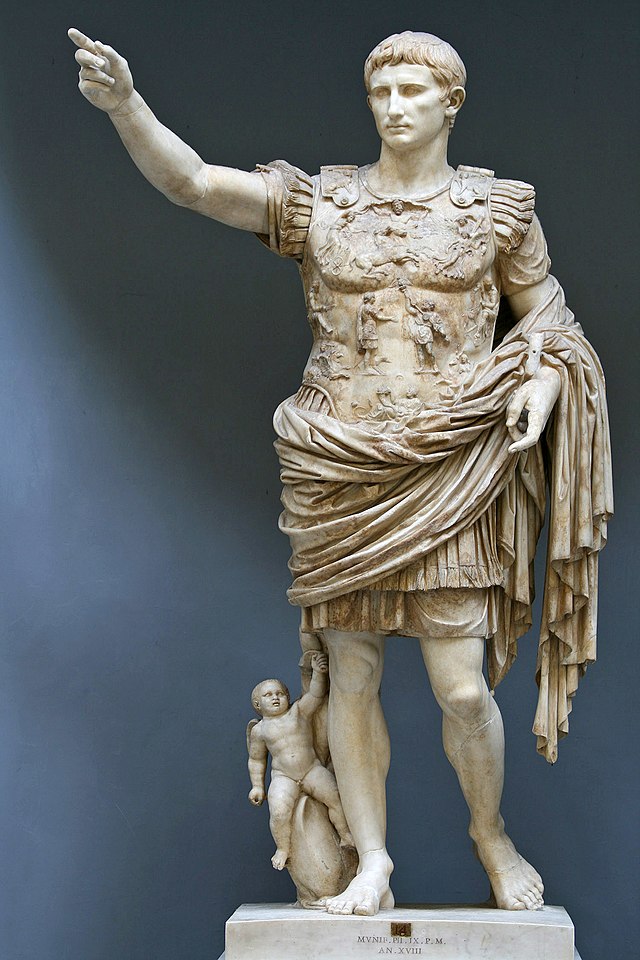
It is often said, that the history of humanity is structured by periodically alternating times of stability and crisis. In this line of argumentation it is said, that humanity - up until now - has never been linear or stable in it's development, being or becoming. Times of comparable stability, peace and prosperity gave way for times of crisis, war and collapse, which in turn have ended in more peaceful and prosper times again and so on...the oscillation between crisis and stability, thrive and collapse is said to be an essential part of history. Following this train of thought, the more cynical realists of our times say or sigh, that the next time of crisis and collapse is now afore. The last decades were comparatively peaceful and stable1, they say, and now it is time for collapse and war again, which we really can't do much about. They justify this view with historical events, like the last huge financial crisis in 1929 and its eventual resulting in World War Two, with the huge crisis of farming and starvation in France in the late 18th century, that resulted in upheaval and eventually - but not for long - democracy, or the fall of the Roman Republic which - after times of chaos - was replaced by Augustus' - comparatively stable and prosper - Imperium.
It is Michel Serres' main message of temps de crises that all of our contemporary crises are connected and have to be seen as an entity, which can not be effectively be divided into parts. So, by attempting to save merely the contemporary financial system and doing nothing about the rest, we do not actually get to the root of the problem. It actually seems, that the more we try to hold the financial system stable and save it from collapse, the bigger the crisis in other domains of life gets (the growing of social inequality, of extremist and fundamentalist views, of the number of potential and actual wars and of Carbon-dioxide emissions and environmental catastrophes and crimes). If we accept that everything earthly (systems, humans, continental plates, flowers, everything...) is periodically prone to times of crisis and possibly collapse, it therefore seems that trying to prevent the financial, capitalist, growth-based economy from collapsing is actually a dangerous undertaking. In trying to maintain a system that apparently doesn't seem to work any longer in any satisfying kind of way, we are risking to let the general crisis of our time grow to such an extent, that a violent, war-like and horrible collapse will result from it. Because - if we see crisis as a natural part - we should wrap our head around the thought of changing something more radical to get out of the crisis again. Sticking to the old systems seems flawed, because it apparently reached its best-buy-date and we should dispose of it, when it's not working any longer. If not, we will make the crisis grow in other domains. We maintain our human-exploitation based economy and social upheaval and war will grow. We maintain our nature-exploitation based economy and we will face ecological collapse, which might make earth uninhabitable for human beings. To prevent these horror scenarios, we should therefore consider thinking about collapse in a completely different way. We should see it as a natural part of things it and accept it, live with it. In other words: we should experiment with the idea of affirming collapse, which I will quickly present in the following sentences.
If we accept, that humanity's development has never followed a straight line, but has taken weird turns, twists and roundabouts and therefore see times of crisis, decline or even collapse as an normal part of humankind, we should find a way of domesticating these "darker" sides of human development. We shouldn't thrive to maintain humanity and society in an ever growing, ever-prosper and ever-the-same state, but should learn to accept, that there are times of growth and times of decline, and that they are naturally alternating. That humanity and its social structures are ever-changing, to put it in one word. And - first and foremost - we should never forget that we are the people who are worth saving, and not the system.
Maynard Keynes
So - if we say that the financial system was very close to collapsing in 2008 and we are ever-since trying to prevent it from doing so, we should probably learn to wrap our head around letting the system collapse. Let's stop all these immense fiscal and social efforts to maintain a system which does no longer work. Let's go with the flow of economic development and accept that the system is dying. This line of thought is actually and rather surprisingly in accordance with what one may call the chief designer of the liberal financial system, Maynard Keynes, who himself stated, that this system will only work for about five generations (and we are this fifth generation) and that afterwards we will have to think up something completely new. 
So to let the system collapse is actually in line with the most neo-liberal doctrine one could think of. In fact, this is much more liberal than the neo-liberal capitalists of our days are. Because they betrayed their own doctrine when they cried for the State to help save the banks which would have otherwise collapsed. So let's be more liberal than the liberals and accept that the system is dying - that it had its days but that these days are now over. And even this is in accordance with probably
In contrary to most of the last century, we lack a real2 alternative to the current economic system and I guess this is why, we stick to the old system - in lack of a feasible alternative. But this is a notion, we should overcome, to really achieve change. Because, who says, that the next economic model will be some perfect model, which some philosopher or economic will come up with in a perfect and ready-to-apply form? This seems to me to be a very outdated Platonist understanding of humanity's structures and concepts. No real working system was ever completely formulated in one single book or by one or several single authors. There was no theorist, who lay down the basic principles of capitalism and then some queen or king came along to apply it. It grew naturally out of human development, which is what made it work for so long (and might be the reason, why Communism never really worked). (Btw: this is or was the agenda of the better branches of the #occupy-movement: having no ideological, predefined goals, but just expressing unhappiness with the current situation and giving way / opening up for new ideas and ways)
The times of liberal capitalism are done and there is no way to prevent its collapsing in its current form. We should learn to accept and embrace that fact - we live in a time of crisis - things have to be done in a new way, because that's the way it is. Let's rid ourselves of the uptight notion of clinging to a system that is no longer working. The more we free ourselves from this blockage, we will find ways of dealing with what comes at us and be able to find solutions and economic models, which fit better to our times and situations. Let the system collapse in a humane way, before the situation gets too bad, the prices were too high and the collapse of our financial system will be accompanied by war and chaos. Humanity is more creative than some of us tend to think - if we affirm collapse, new results, which might be much better for our times and situation, might await. Let's open ourselves for this opportunity. Let's fall in love with our darker times and make the best of it.




1 this notion is probably only applicable for the wealthier states, which have externalized and outsourced their conflicts to financially poorer regions, and is therefore and in general highly debatable. But it is still a narration, which I find interesting and I would like to pursue for this essay's intention.
2 if we consider Communism as a real alternative to capitalism, which we should at least not take for granted.